
Today, let's look at a core component that is everywhere in industry but often overlooked in everyday life: the bearing.
Have you ever wondered why a high-speed train runs so steadily, a fan turns so smoothly, or a washing machine survives the violent motion of its spin cycle?
The answer may be hidden inside every rotating machine: bearings.
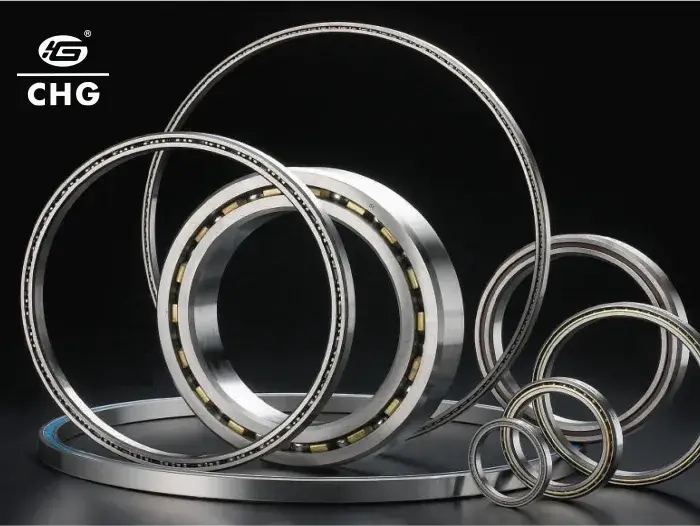
What Is a Bearing?
Simply put, a bearing is a mechanical component that supports a rotating shaft. Its essential purpose is straightforward:
Reduce friction so things rotate more smoothly.
The simplest analogy is that bearings are the joints of the mechanical world. Without joints, our arms and legs could not move. Without bearings, a rotating shaft would generate enormous sliding friction. At best, the machine would run roughly and consume excessive energy; at worst, it would wear, seize, and fail after only a short period.
What Does a Bearing Look Like?
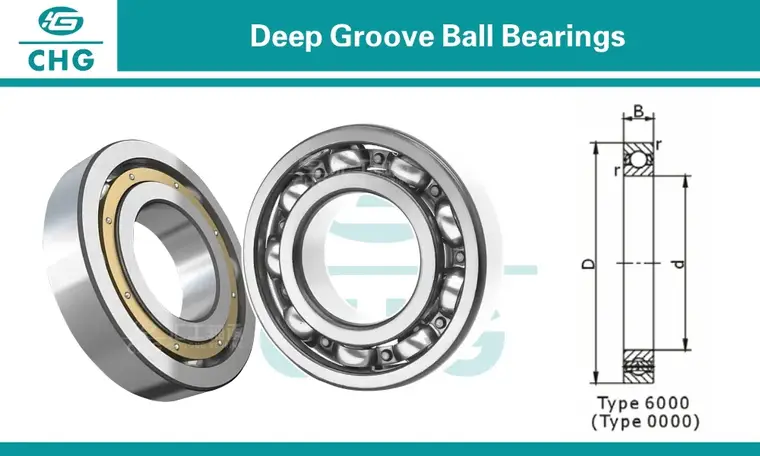
A typical deep-groove ball bearing looks like this:
Outer ring: the stationary ring on the outside
Inner ring: mounted on the shaft and rotating with it
Rolling elements: balls, cylindrical rollers, or tapered rollers that roll between the rings
Cage: separates and guides the rolling elements so they do not crowd together
These four components must work together precisely for the bearing to rotate smoothly, steadily, and efficiently.
How Many Types of Bearings Are There?
Bearings are far more diverse than many people realize. More than 150,000 variants are traded worldwide for different operating conditions, loads, and machines. The most common industrial categories are summarized below:
Deep-Groove Ball Bearing
Key Characteristics: The most common industrial type; simple, economical, highly versatile, and suitable for high-speed, light-load duty
Typical Applications: Household motors, fans, pumps, and small machinery
Cylindrical Roller Bearing
Key Characteristics: High load capacity, excellent radial performance, wear resistance, and impact resistance
Typical Applications: Automotive wheels, industrial gearboxes, and large motors
Spherical Roller Bearing
Key Characteristics: Self-aligning; compensates for shaft deflection or installation error and suits severe, heavy-load conditions
Typical Applications: Paper machines, cement mills, mining equipment, and large fans
Angular Contact Bearing
Key Characteristics: Carries combined radial and axial loads with high precision and rigidity for high-speed, accurate rotation
Typical Applications: Machine-tool spindles, precision instruments, and aerospace equipment
Thrust Bearing
Typical Applications: Designed specifically for axial load; not suitable for radial loading and offers strong axial capacity
Typical Applications: Cranes, elevators, screw conveyors, and vertical motors
How Strong Is China's Bearing Industry?
Domestic bearings are sometimes underestimated. China is in fact the world's third-largest bearing producer, with enormous industrial scale, a comprehensive supply chain, and leading global production capacity, behind only a few established bearing nations. Long-standing manufacturers include the three major names often grouped as HRB, ZWZ, and LYC, while newer leaders include C&U Group and Tianma Bearing. China is already self-sufficient in general-purpose low- and mid-range bearings and exports large volumes worldwide. In the most demanding fields, however—including aerospace, premium CNC machine tools, precision medical equipment, and critical automotive systems—high-precision, long-life bearings for extreme conditions are still dominated by imported brands. They remain a strategic challenge for domestic manufacturing.
In recent years, national efforts to localize advanced equipment have accelerated R&D and import substitution. Leading companies are increasing investment and making progress in advanced materials, precision machining, and life testing, gradually narrowing the gap with the world's best. Bearings may be small and inconspicuous, but they are fundamental industrial components and the essential moving elements of machinery. From appliances and toys to high-speed trains, aircraft, and defense equipment, almost every rotating system depends on them. Localization of premium bearings is therefore directly linked to the independence and security of China's advanced-equipment industry.