Load Path & Bearing Function
The complete roll system transfers rolling forces through work, intermediate and backup rolls to the mill housing. Each bearing position should be selected according to its load direction and supporting function.


CHG reviews complete bearing arrangements for work rolls, backup rolls, intermediate rolls, roll necks and axial support positions. Solutions are evaluated according to mill type, roll layout, load path, speed, temperature, thermal expansion, roll shifting, lubrication and maintenance requirements.
The complete roll system transfers rolling forces through work, intermediate and backup rolls to the mill housing. Each bearing position should be selected according to its load direction and supporting function.
A coordinated locating and non-locating arrangement controls axial position while allowing thermal movement and preventing unwanted internal load.
Temperature changes and axial roll shifting may require controlled displacement between the shaft, bearing and housing.
Bearing accuracy and system rigidity influence roll alignment, strip thickness, flatness, surface quality and stable rolling performance.
Lubrication supply, contamination control and maintenance access should be coordinated across all bearing positions.
Complete rolling mill and stand layout
Roll arrangement and bearing position diagram
Existing bearing brand, number and quantity list
Work, intermediate and backup roll dimensions
Roll neck, chock and housing dimensions
Radial load, axial load, rolling force and speed
Operating temperature and cooling conditions
Roll shifting or axial movement stroke
Precision, runout and strip-quality requirements
Lubrication, filtration, sealing and cooling method
Failure history and maintenance interval
2D / 3D drawing, photo or sample information
Bearing type for every roll-system position
Load path and bearing-function allocation
Locating and non-locating arrangement
Thermal expansion and axial displacement concept
Roll-shift and thrust-bearing arrangement
Size, fits and adjacent mounting structure
Material and heat-treatment direction
Precision class, internal clearance or preload
Cage, sealing and lubrication requirements
Replacement compatibility and standardization opportunities
Inspection documents, quotation and delivery proposal

Rolling mill bearings with bore diameter from 100mm to 1600mm for work rolls, backup rolls, intermediate rolls, roll necks and axial support positions.
CHG can evaluate the relationship between radial bearings, axial locating bearings, floating positions, roll shifting, chocks, lubrication and maintenance.
Custom manufacturing and replacement review are available by complete drawing, bearing list, original number, dimensions, sample or operating data.
Material certificates, heat-treatment records, dimensional inspection, precision inspection, product photos and packing photos can be provided according to order requirements.
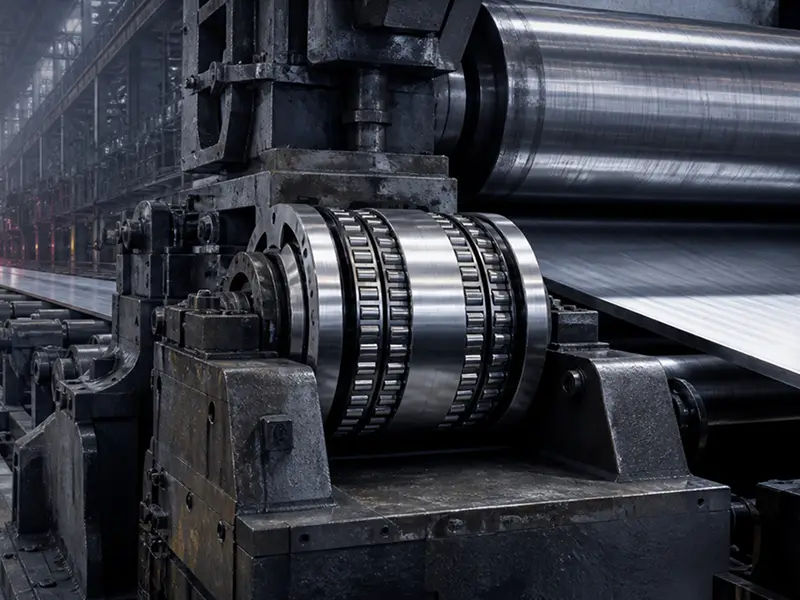
Complete bearing solutions for steel hot rolling, cold rolling, plate, bar, wire rod and section mills.
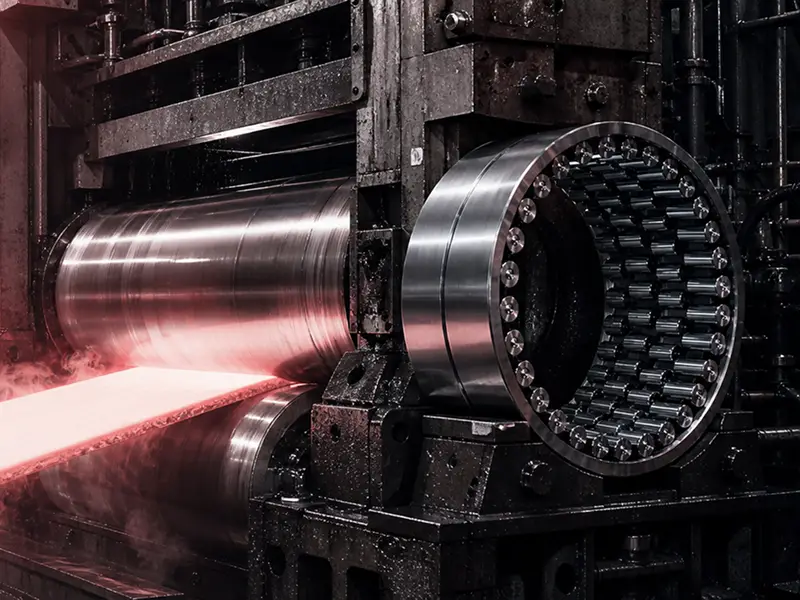
System solutions for heat, cooling water, scale, shock loads and continuous rolling conditions.
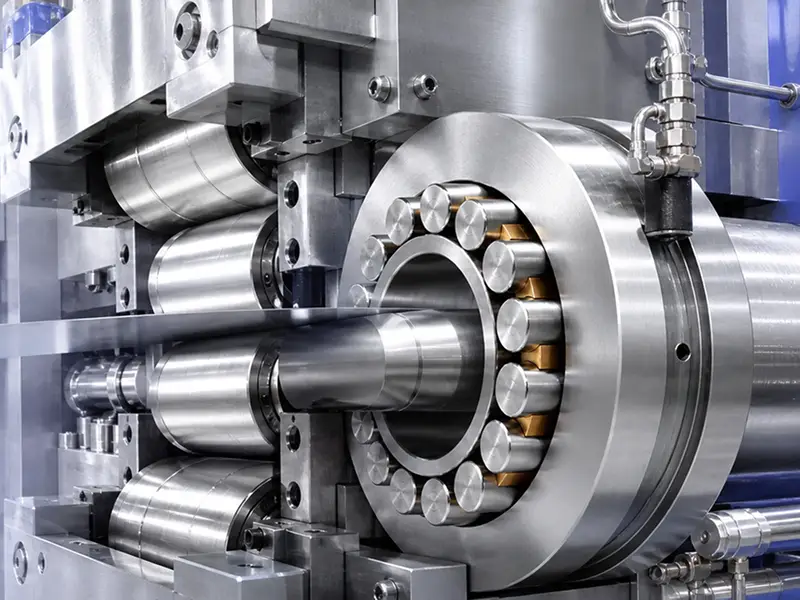
Precision, rigidity, low runout and clean-lubrication solutions for cold rolling systems.
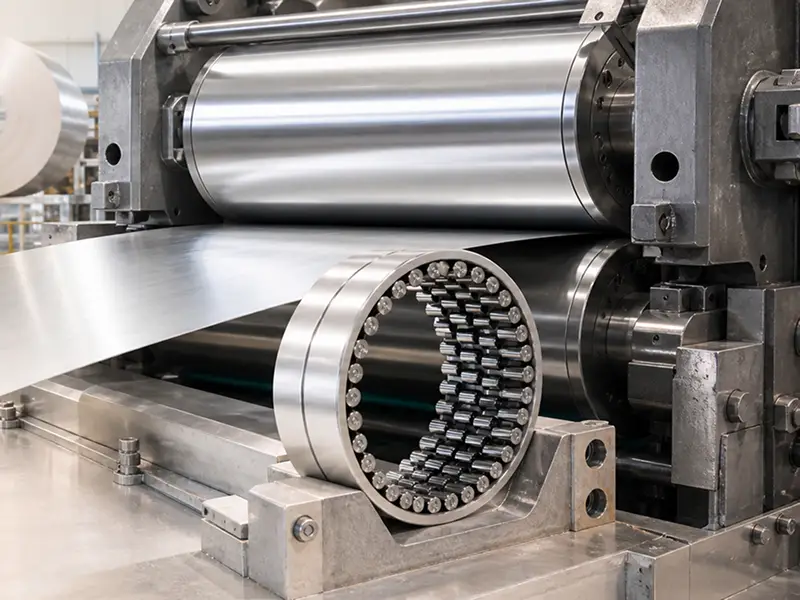
Smooth, low-friction and precision bearing solutions for aluminum plate, strip and foil rolling lines.
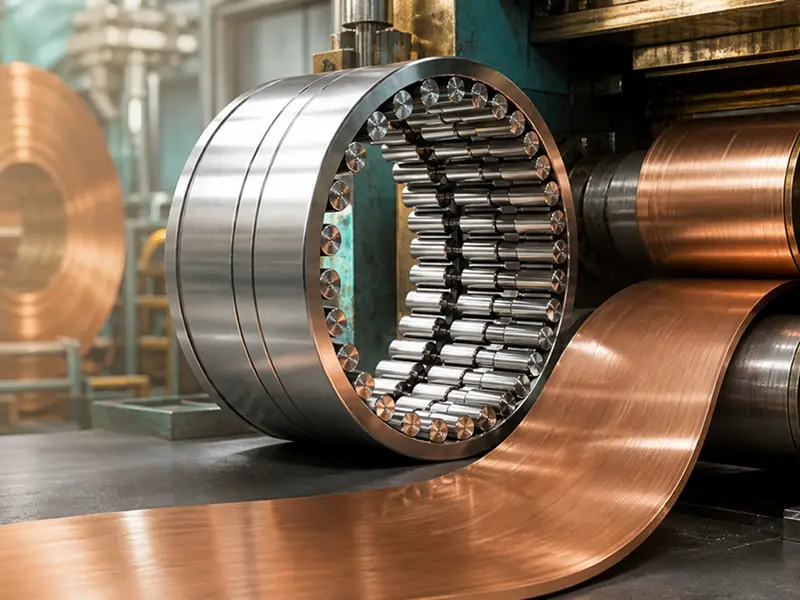
Application solutions for copper, brass, titanium, nickel and other non-ferrous rolling systems.

Get a quick quote
We typically confirm within 24 hours.
Please provide the mill type, roll arrangement, bearing positions, current bearing list, roll and roll-neck dimensions, radial and axial loads, speed, temperature, roll shifting, lubrication, maintenance history and complete drawing if available.
Yes. CHG can review work roll, backup roll, intermediate roll, roll neck and axial support positions as one coordinated arrangement instead of treating each bearing independently.
The arrangement is evaluated according to axial load, thermal expansion, roll shifting, shaft and housing shoulders, fits, thrust-bearing position and maintenance requirements.
Yes. Send the original brands, bearing numbers, quantities, dimensions and roll-system drawing for replacement compatibility and standardization review.
The bore diameter range is generally from 100mm to 1600mm. Custom dimensions and structures can be reviewed according to drawings and application requirements.
We couldn't find anything matching "".

Service First